
Google Gemini is worth trying in 2026 if you want help drafting, summarizing or exploring a question. It is not a replacement for checking sources, and paid access is worth considering only when the features available to your account solve a task you actually do.
- Is Gemini worth it? Google Gemini is worth trying for drafts and summaries, but check its claims against original sources.
- Use Google Search when you need source pages; use Gemini when you need help working through an idea.
- Check the current plan details before paying: access to features can differ by account and location.
Is Google Gemini worth it in 2026? Plans, features and limits
Google Gemini is best for people who want help turning ideas or supplied material into a useful first draft. Its main limit is reliability: an answer that reads well is not proof that its facts, citations or interpretation are correct. If your task is to find an original document or confirm a current claim, start with Google Search and inspect the source itself.
| Option | Best for | Advantage | Limit |
|---|---|---|---|
| Google Search | Finding pages and checking original sources | Lets you inspect where information came from | You still have to compare and interpret what you find |
| Gemini with the access available to your account | Drafting, summarizing and asking follow-up questions | Helps you work through a task in conversation | Answers need checking before you rely on them |
| Expanded Gemini access, if offered to your account | A feature you need but cannot use with your current access | Can make sense when that feature changes your workflow | Paying does not make every answer accurate |
That comparison is the decision in brief. Try Gemini on a real task before you judge it by a demo question. Then check whether your current access already handles that task; a paid plan has no clear purpose if it does not remove a limit you encounter.
Why this matters
A search result and a generated answer ask you to do different kinds of work. Search helps you locate pages you can read and compare. Gemini helps you produce or refine text, but you must still decide whether its answer matches the underlying evidence. Search results can also contain generated summaries, so opening the original page remains the useful check.
This distinction matters most when an answer will be sent to someone else or used to make a decision. A polished summary can omit a condition that changes the meaning. Treat Gemini as a drafting partner, not as the final source of record.
What can Gemini help you do?
Start with work where you can recognize a useful result and correct a bad one. These are practical tests, not promises that every response will be right:
- Draft from your instructions. Give Gemini the audience, purpose and points the text must cover. Edit the result for accuracy and your own voice.
- Summarize material you provide. Ask for the main points and anything that remains unclear. Compare the summary with the material before sharing it.
- Explore a question. Ask for possible approaches, objections or questions you have missed. Use the response to guide further reading, not to settle a factual dispute.
- Revise existing writing. Ask for a shorter version or a clearer structure, then check that the revision has not changed your meaning.
A strong first test is 1 draft paragraph on a topic you know well. You can judge whether Gemini followed the brief without relying on it for unfamiliar facts. A second test is a summary of material you can reread. If either result takes more effort to repair than writing it yourself, that task is not a reason to change your workflow.
How do Gemini and Google Search differ?
Use Search to locate evidence and Gemini to work with ideas or text. The distinction is not that one always gives a short answer and the other always gives links; it is what you need to verify at the end.
For example, if you need the wording of a published rule, find the issuing source and read the relevant passage. If you already have that passage and need a plain-language draft for a colleague, Gemini can help you write one. Compare the draft with the passage before it goes out. That extra check is especially important when dates, exceptions or definitions affect the answer.
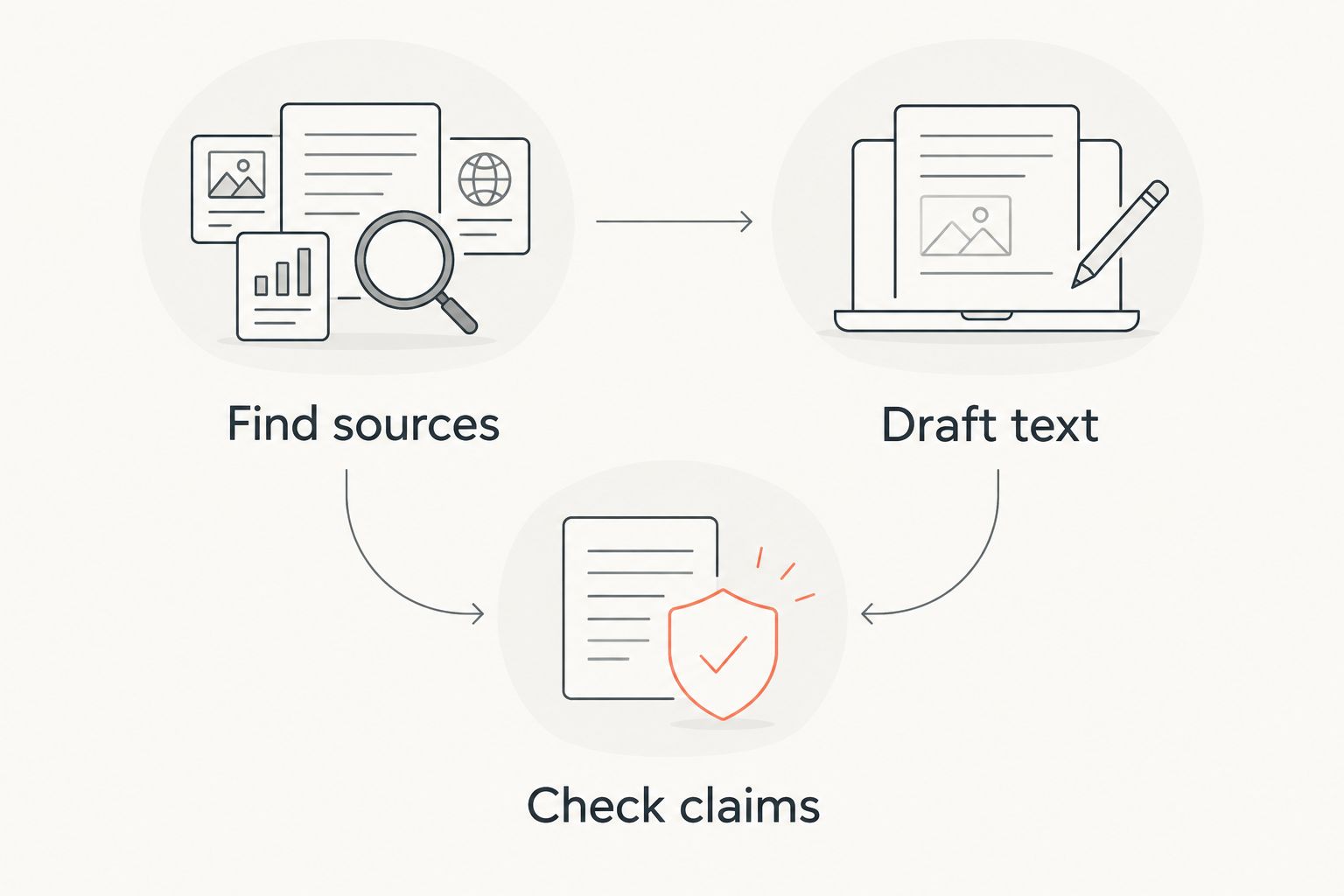
You do not have to choose one tool for every stage. Find a source, use Gemini to organize your notes, and return to the source when you review the draft. That sequence keeps the original material available when a sentence sounds certain but lacks support.
Is a paid Gemini plan worth it?
In 2026, Google AI Plus is the paid plan to try for lighter recurring use; Google AI Pro is the practical choice when the 1 million-token context window or wider access changes work you do every week. Google AI Ultra is for people who repeatedly need the highest limits or its specific extras, not for ordinary drafting and summaries.
Google Gemini plans at a glance in 2026
| Plan | Monthly price | Storage | Context window | Best for |
|---|---|---|---|---|
| Free | $0 | 15 GB with a Google Account | Varies by model and feature | Trying Gemini for drafts, summaries and questions |
| Google AI Plus | $4.99 | 400 GB | Not listed as expanded in the current plan comparison | Lighter use that needs more access than the free tier |
| Google AI Pro | $19.99 | 5 TB | 1 million tokens | Regular work with long documents, larger files or repeated research |
| Google AI Ultra | $100 or $200, depending on the Ultra option | 20 TB or 30 TB | 1 million tokens | Frequent high-limit use and Ultra-only features |
Google's current US plan comparison lists 400 GB with Google AI Plus, 5 TB with Google AI Pro, and storage starting at 20 TB with Google AI Ultra. It also lists a 1 million-token context window for Google AI Pro and both Ultra options. Prices and availability can change by country, account and offer, so confirm the checkout page before subscribing.
Which Gemini plan should you choose?
- Stay free if a few drafts, summaries and follow-up questions cover the work you do. A paid plan is not useful merely because it has a larger allowance.
- Choose Google AI Plus at $4.99 per month if the free tier's limits interrupt lighter recurring work and 400 GB of storage is useful.
- Choose Google AI Pro at $19.99 per month if long documents, larger files, Gemini in Google apps, or the 1 million-token context window are part of work you repeat.
- Choose Google AI Ultra only for a named need. The $100 and $200 Ultra options add higher limits and larger storage tiers, but those gains do not make ordinary answers more reliable.
Use this short trial before deciding:
- Choose 3 real tasks. Include something you draft, something you summarize and something you need to verify.
- Try your current access first. Record where the result helps and where you hit a limit. Judge the finished work, not just the first response.
- Match the limit to the plan. Compare the recurring limit with the named plan benefit: access level, storage or the 1 million-token context window.
- Review the final output. If the task still needs extensive fact-checking or rewriting, a larger plan does not settle whether it is useful.
This is a test of fit, not a prediction about how often you will use Gemini. The relevant question is whether an available feature helps you complete your own task without creating more checking work than it saves.
Why does the value of Gemini vary?
- Your task. Drafting an email gives you a result you can edit. Establishing an unfamiliar fact requires source review as well.
- Your familiarity with the subject. You can spot missing context more easily when you already know the material.
- The material you supply. A clear brief or a passage to summarize gives you something concrete to compare with the response.
- Your need for original sources. If you need exact wording, a generated paraphrase is not enough.
- Your account's available features. A plan matters when it grants access you will actually use, not merely because it offers more options.
- The sensitivity of the material. Check the applicable settings and terms before entering private information; use another workflow if you cannot share it.
These factors explain why two people can reach different verdicts without either being wrong. Someone polishing a draft can use an imperfect first response. Someone confirming an important claim needs a traceable source and must check what it says.
Can Gemini replace searching the web?
No: Gemini does not remove the need to inspect original sources when accuracy matters. It can help you frame a question or understand a topic you are beginning to explore. Search is the next step when you need to check a claim, read a document in context or confirm that information is current.
For a consequential answer, check 2 independent source pages where appropriate and look for agreement on the specific claim, not just the broad topic. If the claim concerns a rule or policy, prioritize the organization that publishes it. An answer that cannot be traced to suitable evidence is not ready to use as a fact.
Is Gemini useful without paying?
Yes, if the access currently available to you handles the tasks you want to complete. Start there and judge the result: a plan comparison cannot tell you whether you like the drafts or whether summaries preserve details that matter to you. Check current access and plan terms directly before assuming a particular feature is included.
FAQ
Is Gemini worth it in 2026?
Gemini is worth trying in 2026 for drafting, summarizing and exploring ideas. Check factual claims against original sources before relying on its answers.
Is Gemini better than ChatGPT?
Gemini is better than ChatGPT when Gemini's Google-app integration, Google Search features or a Google AI plan's storage and context benefits match the work at hand. ChatGPT is the better choice when its tools, controls or working style fit the task better; test both on the same real task before paying.
What are the downsides of Google Gemini?
Google Gemini can produce confident answers that still need source checks, and its useful features, limits and availability vary by account, country and plan. A higher-priced plan increases access but does not guarantee a correct answer.
Do I really need Gemini?
You need Gemini only when it saves time on a task you repeat without adding more checking work than it removes. Start with the free version, then pay only after identifying a recurring limit that a named plan solves.
Is Google Gemini better than Google Search?
Google Gemini is better suited to working through a draft or question; Google Search is better suited to locating pages you can inspect. Use both when you need a readable answer backed by sources.
Should I pay for Gemini?
Pay for Gemini only if the free tier lacks a feature you need for a recurring task. In 2026, Google AI Plus is $4.99 per month and Google AI Pro is $19.99 per month in the US; confirm current local pricing before subscribing.
Can I trust Gemini summaries?
Trust a Gemini summary only after comparing its important claims with the original material. Check dates, qualifications and exceptions before sharing it.
Can Gemini replace research?
Gemini can help plan research, but it does not replace checking original sources. Read the relevant source when the answer affects a decision.
What should I try first in Gemini?
Try a short draft on a subject you already know. You can judge whether the response follows your instructions without depending on it for unfamiliar facts.
One last thing
The most useful Gemini test is not a question with an impressive answer. It is a familiar task with an outcome you can check. In 2026, start with work you already do, inspect the result, and expand your use only where the finished output earns your time.